

Can You Sell a Deceased Person’s Car Before Probate?
After losing someone, even simple tasks can feel overwhelming. You may need to sell a deceased person’s car, but you aren’t sure if probate has to come first. The rules around executors, the DVLA and the V5C logbook can seem confusing at an already difficult time.
Here’s a straightforward guide.
Key Takeaways: Can You Sell a Deceased Person’s Car Before Probate?
-
Yes, you can sell a deceased person’s car before probate in the UK if you are the legally appointed executor or administrator.
-
You must have authority to act for the estate.
-
The DVLA must be notified of the death and keeper change.
-
Any outstanding finance (HP or PCP) must be settled before sale.
-
The V5C logbook must be completed correctly when transferring the vehicle.
-
Vehicle tax is cancelled once the DVLA is notified.
-
Keep clear records to protect yourself as executor.
Ready to Sell a Deceased Person’s Car?
Compare verified UK buyers in one place and sell with confidence while protecting the estate’s interests.
Can You Legally Sell a Deceased Person’s Car Before Probate?
Yes, you can sell a deceased person’s car before probate, but only if you have the legal authority to act for the estate.
In the UK, this usually means you are the named executor in the will. If there is no will, you must be entitled to apply as the estate’s administrator. Without that authority, you should not sell the vehicle.
A car is classed as personal property, known legally as a ‘chattel’. Because of this, it can sometimes be sold before probate is officially granted.
However, you must still be able to prove you have the right to deal with it. Buyers may ask for confirmation, and the DVLA must be notified of the change.
When Must You Wait for Probate?
There are situations where you must wait for probate before you sell a deceased person’s car. The key factor is legal authority. If there is no will or no one has formally applied to administer the estate, the vehicle should not be sold until that authority is confirmed.
You should also wait if there are disagreements between family members about the estate. Selling the car too early could create disputes later, especially if its value forms part of the overall inheritance.
In some cases, buyers and finance companies will insist on seeing the Grant of Probate before completing the sale.
What Happens to the V5C Logbook After Someone Dies?
The V5C logbook does not automatically change when someone dies. It will still show their name as the registered keeper. The DVLA must be informed so their records can be updated and any remaining road tax refunded to the estate.
If you plan to sell a deceased person’s car, the executor can complete the relevant section of the V5C to transfer it. If the logbook is missing, you can apply for a replacement using form V62 before selling.
What to Do in the First 48 Hours (Immediate Checklist)
Before you think about selling, focus on protecting the car and avoiding fines. The first 48 hours are about securing its legal status, not rushing into a decision.
| Action | Why It Matters | What To Do |
| Stop driving the car | Insurance may be invalid | Do not drive until new cover is arranged |
| Check tax status | Tax is cancelled after death | Confirm DVLA has been notified |
| Move off the public road | Uninsured vehicles can be fined | Park on private land |
| Declare SORN | Legal requirement if untaxed/uninsured | Apply online via DVLA |
| Secure documents | Needed for probate and sale | Keep V5C, keys and service history safe |
How to Sell a Deceased Person’s Car Before Probate (Step-by-Step)
If you have the legal right to act for the estate, you can begin the process carefully and correctly. Here’s how to sell a deceased person’s car before probate in the UK.
1. Confirm you have legal authority
First, make sure you’re entitled to deal with the estate. This usually means you’re the named executor in the will. If there is no will, you must be legally entitled to apply as administrator. Without this authority, you should not sell the car.
2. Notify the DVLA of the death
You can inform the DVLA directly or use the UK Government’s Tell Us Once service. Tell Us Once can notify several departments at once. This may include the DVLA, HMRC, the Passport Office, local councils and the DWP.
If you prefer not to use online services, you can write to the DVLA. Include:
- The deceased person’s full name and address
- Their date of birth
- The date of death
- The vehicle registration number
- Their driving licence number (if known)
- Your relationship to them
3. Check for outstanding finance
If the car was bought on HP or PCP, the finance must be settled before ownership can transfer. Contact the lender and request a settlement figure. The vehicle cannot legally be sold until the balance is cleared.
4. Locate the V5C and supporting documents
Find the V5C logbook, service history and spare keys. The executor will need to complete the relevant section of the V5C to transfer the vehicle. If it’s missing, you can apply for a replacement using form V62.
5. Get a realistic car valuation
Before accepting an offer, check the car’s current market value. Probate vehicles are sometimes undervalued because sellers feel pressured. Comparing multiple offers can help ensure the estate receives a fair price.
6. Complete the sale and notify DVLA of the transfer
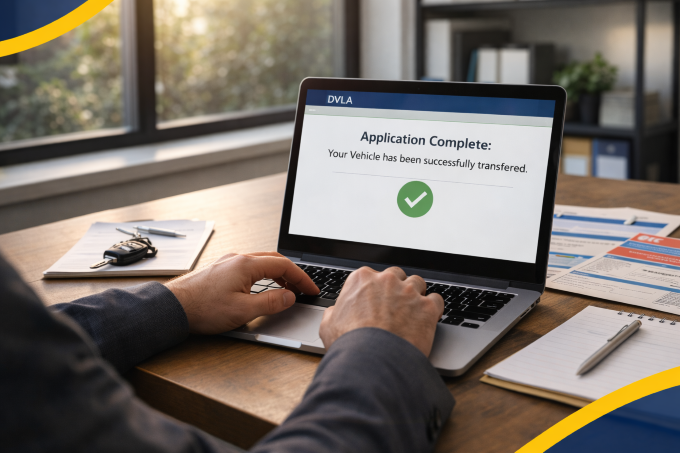
Once sold, complete the V5C transfer section and notify the DVLA of the new keeper. Keep records of the transaction for estate accounts. The sale proceeds should be paid into the estate, not a personal account.
Selling Before vs After Probate – What’s the Difference?
Selling before probate can be quicker. This can help if the car is losing value, uninsured, or costing money to store. If you’re the named executor and there are no disputes, it’s often possible to move ahead.
For example, if the estate includes property or investments but the car itself is of relatively low value, executors often choose to sell the vehicle early. This helps reduce ongoing insurance, tax and storage costs.
Selling after probate is usually simpler. Once probate is granted, your legal authority is clear. Buyers feel more confident, and paperwork tends to move more smoothly. The downside is waiting. Probate can take weeks or even months, and during that time, the car may depreciate.
Here’s a simple comparison:
| Selling Before Probate | Selling After Probate |
| Faster access to funds | Clear legal authority |
| May require extra proof | Fewer buyer concerns |
| Useful if car is uninsured | Lower legal risk |
| Risk if disputes arise | More straightforward process |
How Long Does Probate Take in the UK?
Probate in the UK usually takes between 8 and 16 weeks, but it can take longer depending on the estate.
If the will is straightforward, it’s often quicker. Disputes can slow things down. However, delays can happen if the estate is complex, there are property sales involved, or HMRC needs further information about inheritance tax.
It’s also common for applications to take several weeks just to be reviewed and approved. During busy periods, processing times can stretch further.
What is the Best Way to Sell a Probate Car?

The best way to sell a probate car is the option that balances fairness, simplicity and proper documentation. As an executor, your duty is to act in the estate’s best interest. That means achieving a reasonable market value and keeping a clear record of the transaction.
Private sales can achieve more, but they require effort and time. Dealers are convenient but may price cautiously.
However, online car buying services allow you to compare car buying companies. You can review multiple offers from verified buyers and choose the one that best suits the estate’s needs.
Comparison Table: Choose the Simplest Way to Sell a Probate Car
| Selling Option | Pros | Cons | Best For |
| Private Sale | Potentially higher price | Takes time, viewings, and insurance required | Executors who are not in a rush |
| Dealers | Quick and straightforward | Often lower offers | Fast, convenient disposal |
| Online Car Buying Services | Simple process, fast payment | Price may be reduced after inspection | Executors wanting speed and minimal hassle |
Frequently Asked Questions
What if I can’t find the V5C logbook?
If the V5C logbook is missing, you can apply for a replacement using form V62 through the DVLA. This can be done online or by post. You should not complete a sale without updating the DVLA properly. Buyers may also request a valid V5C before proceeding.
How to transfer ownership of a car when the owner dies?
The executor or administrator must first notify the DVLA of the death. When the car is sold, the relevant section of the V5C is completed to transfer it to the new keeper. The DVLA must then be informed of the change so their records are updated correctly.
Can an executor sell a car immediately after death?
An executor can sell the car if they have legal authority under the will. However, they must ensure there are no disputes, outstanding finance, or restrictions requiring probate first. In some cases, buyers may ask to see the Grant of Probate before completing the purchase.
What happens to car tax after death?
Vehicle tax is automatically cancelled once the DVLA is notified of the death. Any remaining full months are refunded to the estate. Road tax cannot be transferred to a new keeper, so the vehicle must be taxed again after the sale.
Who receives the sale money?
The proceeds from selling a deceased person’s car must be paid into the estate, not a personal account. The executor is responsible for distributing the funds according to the will or the rules of intestacy if there is no will.
Wrapping Up:
Selling a car during probate can feel complicated, especially at an already difficult time. The key is to understand your legal authority and follow the correct DVLA process. In many cases, you can sell a deceased person’s car before probate, but only if you’re entitled to act for the estate.
Take your time, keep clear records, and make sure the sale is handled properly. A simple, transparent approach protects both you and the estate.