
Latest In-Car Technology 2026: AI, V2L & UK Safety Laws

- Key Takeaways: The 2026 Car Tech Landscape
- Advanced Driver Assistance Systems (ADAS)
- Autonomous Driving
- UK Autonomous Driving Trials and Innovators
- Automated Vehicles Act 2024
- Sustainable Battery Technology
- 1. LFP Dominance:
- 2. Sodium-Ion Batteries:
- 3. Solid-State Batteries:
- The Smart Cabin: AI and Connectivity
- Safety Technologies
- Vehicle Security and Anti-Theft Technology
- 1. Ultra-Wideband (UWB) Keys:
- 2. PIN-to-Drive (The "Ghost" Standard):
- 3. Sleepy Keys:
- Charging Infrastructure, Smart Charging, and Vehicle-to-Grid (V2G)
- Frequently Asked Questions
- How car technology impact driving?
- Which car has the best technology?
- What is hydrogen car technology?
- Is self-driving legal in the UK yet?
- Which UK manufacturers are leading in automotive innovation?
- Final Thought: The latest in Car Technology
The cars are usually judged by their horsepower or 0 to 60 cruse time. In 2026, the defining metric of a new vehicle is its intelligence. The latest in-car technology has shifted the automotive industry from building “machines that move” to creating “software-defined vehicles” (SDVs).
Key Takeaways: The 2026 Car Tech Landscape
In 2026, the automotive industry has pivoted from mechanical performance to digital intelligence. The defining characteristic of a modern vehicle is no longer performance, but its ability to update, protect, and integrate with the energy grid.
- The Rise of the SDV (Software-Defined Vehicle): Cars are now “computers on wheels.” Like a smartphone, their value improves over time through Over-the-Air (OTA) updates that fix bugs and add new features without a dealership visit.
- Safety is Now “Predictive”: New Euro NCAP 2026 protocols are forcing a return to physical buttons for essential controls to reduce screen distraction. Meanwhile, ADAS features like Intelligent Speed Assistance (ISA) and Blind Spot Intervention actively override driver inputs to prevent accidents.
- Liability Has Shifted (Automated Vehicles Act 2024): The UK has legalised “hands-off” driving. In authorised Level 3+ autonomous modes, the manufacturer is now legally liable for accidents.
- Batteries Are Diversifying: The market has split into three technologies:
- LFP: Durable and cobalt-free (standard range).
- Sodium-Ion: Cheap and efficient in UK winters (budget range).
- Solid-State: The premium “Holy Grail” offering double range (arriving late 2027).
- Your Car is an Energy Asset (V2G): New Vehicle-to-Grid (V2G) technology allows EVs to sell battery power back to the National Grid during peak hours, potentially earning owners money and stabilising the UK energy network.
Advanced Driver Assistance Systems (ADAS)
Advanced Driver Assistance Systems (ADAS) are the “guardian angels” of modern driving. Unlike fully autonomous driving, ADAS supports but does not replace the human driver. It uses a network of cameras, radar, and LiDAR sensors to monitor the vehicle’s surroundings.
Key Features You Will See:
- Intelligent Speed Assistance (ISA): Reads speed limit signs and automatically adjusts or warns you (now mandatory on new EU/UK models).
- Lane Keeping Assist (LKA): Gently steers the wheel to keep you centred on motorways.
- Blind Spot Intervention: actively resists a lane change if a vehicle is detected in your blind spot.
While ADAS features are becoming more common, according to the RAC report, 27% of drivers fully trust this technology. However, the trust is growing, and it takes time to overcome the trust gap. Let the people get used to it.
Autonomous Driving
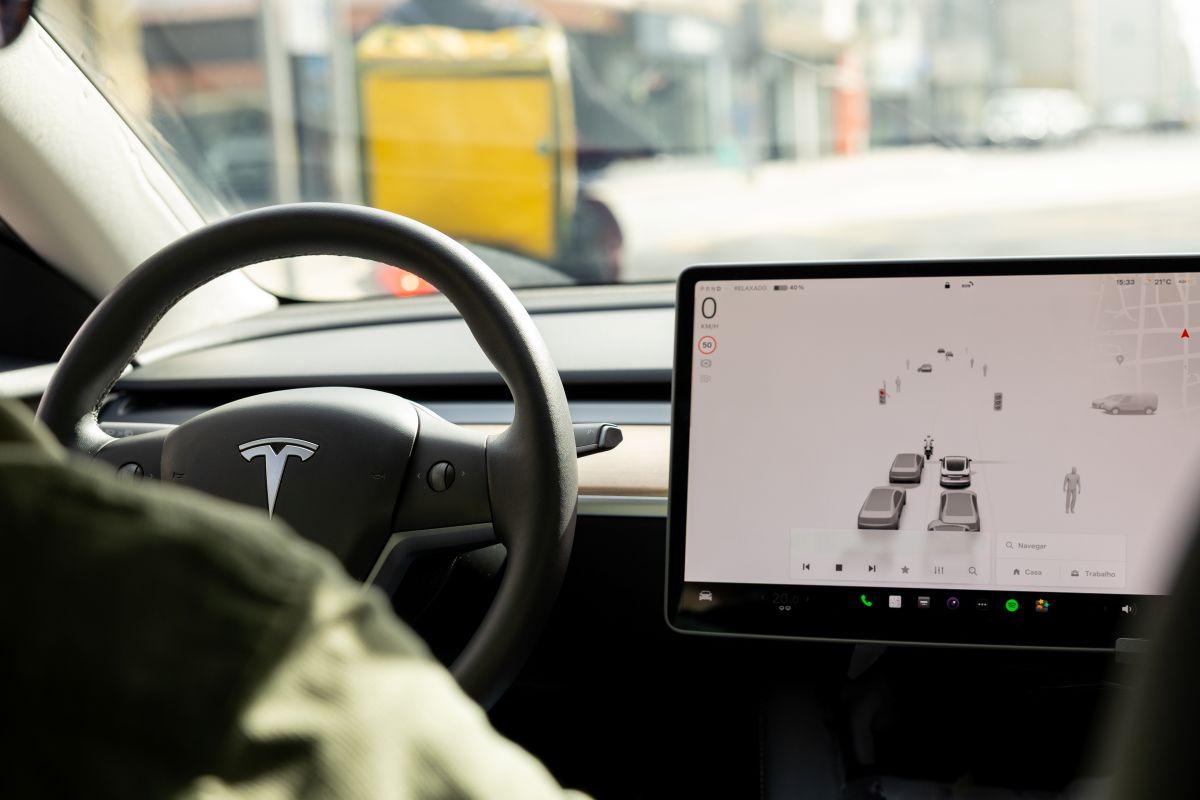
Autonomous driving is no longer science fiction. It now exists, and cars can now drive by themselves without a driver. However, there are three levels of autonomous driving:
- Level 2 (Hands-On): The car handles steering and acceleration, but you must watch the road. For example, Tesla Autopilot, Ford BlueCruise.
- Level 3 (Eyes-Off): The car drives itself in specific conditions (like a traffic jam on the M25), allowing you to read a text. If it asks you to take over, you have seconds to respond. For example, Mercedes-Benz Drive Pilot (EQS), BMW 7 Series.
- Level 4 (Mind-Off): The car handles the entire journey within a specific area. No human intervention is needed. For example, Tesla Cybercab.
UK Autonomous Driving Trials and Innovators
The UK is quietly becoming a global sandbox for self-driving tech, with a focus on “end-to-end AI” rather than just map-based driving. Like Wayve in London.
It is unlike traditional systems that rely on detailed 3D maps. Wayve’s AI learns to drive like a human by seeing and reacting to new scenarios.
Next, Oxa (Oxford/Global), which focuses on the “workhorses” of transport. Oxa is powering autonomous shuttles and industrial vehicles.
Automated Vehicles Act 2024
The UK Parliament has recently passed the Automated Vehicles Act 2024, which lays the legal groundwork for self-driving cars on British roads.
The “Immunity” Clause: The most critical provision for consumers is the liability shift.
- Old Rule: The driver is always responsible.
- New Rule: If a car is in a legally “authorised self-driving mode” (likely Level 3+), the manufacturer (ASDE) becomes liable for any accidents, not the human in the driver’s seat.
This Act is a major step toward making the UK a hub for AV innovation, while ensuring public safety and trust remain top priorities.
Sustainable Battery Technology
The only competition among EV manufacturers is improving their battery technology. Over the last two or three years, battery technology has been significantly improved. Now they are manufacturing better and cheaper batteries. There are three major battery technologies:
1. LFP Dominance:
Lithium Iron Phosphate (LFP) batteries are becoming the standard for entry-level EVs. They are cheaper, contain no cobalt, and are incredibly durable, even if they have slightly less range than high-performance batteries.
2. Sodium-Ion Batteries:
The new technology, which uses abundant sodium (salt) instead of lithium. These batteries work exceptionally well in the cold and are far cheaper to produce. This is best for the UK winter.
3. Solid-State Batteries:
Often called the “Holy Grail”, these promise double the range and 10-minute charging. While Toyota and Nissan are piloting them, they are likely a premium option until late 2027.
The Smart Cabin: AI and Connectivity
Cars are no longer just a machine that moves from one place to another. They are becoming a digital companion of yours, providing comfort and behaving like your assistant. It makes your journey more connected and personalised.
Here’s what’s inside the latest tech-savvy cabins:
- Voice assistants: Control music, navigation, and climate with natural speech.
- Over-the-air updates: Your car gets smarter with software updates, just like your smartphone.
- 5G and V2X: Ultra-fast connectivity enables real-time traffic updates and communication between vehicles and infrastructure.
- Personalised profiles: Your seat, mirrors, and infotainment settings adjust automatically to your preferences.
Safety Technologies
In 2026, safety has moved from passive (surviving a crash) to predictive (preventing it entirely). The headline news for UK buyers is the Euro NCAP 2026 Protocol update, which has already started influencing car designs this year.
The touchscreen panel has been considered a distraction. To achieve a 5-star safety rating, manufacturers are now encouraged to reintroduce physical buttons for indicators, hazard lights, and wipers.
Also, 360-degree cameras, driver monitoring systems and cross-traffic alert technologies have further enhanced drivers’ safety.
Vehicle Security and Anti-Theft Technology
Let’s be honest: Car theft in the UK is a major concern, especially for owners of premium SUVs. Thieves used to boost your key signal. Now, they can peel back a headlight bumper, tap into the car’s nervous system (CAN Bus), and inject a “fake” unlock code. It takes less than 60 seconds.
And here are the solutions:
1. Ultra-Wideband (UWB) Keys:
Unlike old key fobs, UWB keys measure the exact time of flight of the radio signal. If the key is more than 2 metres away, the car knows it’s a “relay attack” and refuses to open. Brands like Jaguar Land Rover (JLR) and BMW have made significant pivots to this technology to lower their insurance groups.
2. PIN-to-Drive (The “Ghost” Standard):
Many high-end UK cars now come with (or are fitted with aftermarket) immobilisers that require a sequence of button presses (e.g., Volume Up -> Cruise Cancel -> Window Down) before the engine will start. Even if they have your key, they can’t drive away.
3. Sleepy Keys:
Motion sensors inside the key fob turn the signal off completely if the key hasn’t moved for 40 seconds (i.e., when it’s sitting on your hallway table).
Charging Infrastructure, Smart Charging, and Vehicle-to-Grid (V2G)
Range anxiety can only be coped with by further enhancing the charging infrastructure. It is like a petrol station after 50 miles. According to Zapmap, there are now 87,000 public EV charging points, with a goal of 300,000 by 2030.
Recently, there has been more focus on building more charging stations and connecting with National Grid to save you money.
Under the UK “Smart Charge Points Regulations”, every home charger now defaults to off-peak schedules. You simply plug in when you get home at 6 PM, but the charger waits until 12:30 AM. It’s the duration where the energy is the cheapest, often 7p/kWh vs 29p/kWh.
Also, you can make money from an electric car through vehicle-to-grid (V2G). V2G allows energy providers to “borrow” a small percentage of your battery during peak hours (5 PM–7 PM) to balance the grid and then refill it later.
Frequently Asked Questions
How car technology impact driving?
Technology has shifted driving from a manual task to a supervisory one. Features like Adaptive Cruise Control and Lane Centring reduce cognitive load (fatigue) on long motorway trips.
Predictive Safety Systems (like AEB) act faster than human reflexes to prevent accidents. However, the rise of touchscreens has introduced new distraction risks. Now, regulators demand a return to physical buttons for key functions in 2026.
Which car has the best technology?
The best technology depends on what you value. From a software and user experience perspective, Tesla remains the gold standard for fluidity and Over-the-Air (OTA) updates.
For V2G & electrical utility, the Hyundai Ioniq 5 / Kia EV9 have the best 800V charging architectures with ultra-fast charging and vehicle-to-load adapters.
And from a luxury tech perspective, the Mercedes-Benz EQS/E-Class with the “Hyperscreen” and Level 3 automated driving readiness is the best car technology.
What is hydrogen car technology?
Hydrogen Fuel Cell Electric Vehicles (FCEVs) use hydrogen gas to generate electricity on board, emitting only water.
It is excellent for heavy transport (trucks/buses) and aviation (e.g., UK-based ZeroAvia). Hydrogen passenger cars like the Toyota Mirai remain niche in the UK due to scarce refuelling infrastructure.
Is self-driving legal in the UK yet?
Technically, yes, but with strict limits. The Automated Vehicles Act 2024 received Royal Assent, creating the legal framework for “self-driving”.
Which UK manufacturers are leading in automotive innovation?
There are several, but here are some that lead in automotive innovation:
- Jaguar Land Rover (JLR): Their “Reimagine” strategy has pivoted them toward an electric-first luxury brand, with massive investments in their Halewood plant.
- Nissan: The EV36Zero hub is a global blueprint for manufacturing, integrating battery production (Envision AESC) and renewable energy directly into the car factory.
- Bentley: Leading the “sustainable luxury” charge with their “Beyond100” strategy, focusing on synthetic fuels and fully electric ultra-luxury models.
Final Thought: The latest in Car Technology
Buying a car in the UK used to be about the engine; today, it is about the architecture. When you walk into a dealership this year, look beyond the 0-60 time. Ask about the processor speed, the OTA update frequency, and whether the car can power your home.
The “latest technology” isn’t just about screens. It’s about buying a vehicle that won’t be obsolete in three years.