

What to Do If You are the Victim of a Car Accident?
A car accident is something that no one wants to experience in their life. It is an unwanted thing that sometimes happens, and the question is what to do if you are the victim of a car accident. But if the accident wasn’t your fault, you need to follow these crucial steps so that you get your insurance claim.
Key Takeaways: What to Do If You are the Victim of a Car Accident
After a non-fault accident, stay safe, gather evidence, report it properly, get medical checks and ensure the other insurer covers repairs, costs and a like-for-like replacement vehicle.
-
Always stop after any accident. It’s a legal requirement under the Road Traffic Act 1988.
-
Make the scene safe. Switch off the engine, use hazards and avoid placing triangles on motorways.
-
Call 999 for injuries or danger, and 101 if you cannot exchange details.
-
Gather strong evidence. Photos, dashcam clips and full driver details protect your non-fault position.
-
Get checked by a medical professional. Hidden injuries often appear hours later and insurers need medical proof.
-
Report the incident to the police within 24 hours if details were not exchanged or the other driver fled.
-
Tell your insurer as a notification-only call, even if you do not plan to claim.
-
In a non-fault case, the other insurer should cover your losses, including excess and repairs.
-
You are entitled to a like-for-like replacement car through credit hire, not just a small courtesy car.
-
Whiplash claims under £5,000 must go through the OIC portal, but payouts increased from May 2025.
Car Damaged Beyond Repair? Sell it as it is
If your car is severely damaged by accident, Exchange My Car can help. Compare instant offers, book free collection, and get paid fast. It’s quick, simple, and all online.
Phase 1: Immediate Safety & Legal Obligations (At the Scene)
Once you are hit by a car and your adrenaline is pumping, first, you need to calm down. Here is what you need to do.
1. Stop the Vehicle Immediately
First things first, stop the car immediately. It doesn’t matter how minor the accident is. Under the Road Traffic Act 1988, you must stop. Failing to do so is a criminal offence (classed as a “Fail to Stop” or Hit and Run), which can lead to points on your licence, a fine, or even imprisonment.
2. Secure the Scene

Next, you have to take a second to assess the danger. You have to turn the engine off and turn on your hazard warning lights to warn other traffic. If you see any smoke, get everyone out and place warning triangles behind your cars unless you are on a motorway.
3. Call the Right Number (999 vs. 101)
You don’t need to call the police for every bump, but you must know when it is a legal requirement. You need to call emergency services (999) if someone is injured, the road is blocked, or you suspect the other driver is under the influence of drink or drugs.
However, you can call non-emergency services, 101, if there is no major collision, but you cannot exchange details.
Phase 2: Gathering Evidence After Car Accident (Your “Non-Fault” Shield)
As a victim of a car accident, evidence is your shield. You need to gather evidence and build a case that proves you were not a fault.
1. The Golden Rule: Silence is Golden
Be polite, check they are okay, but never say “Sorry.” In the UK, saying “I’m sorry” (even just to be polite) can be interpreted as an admission of liability. Let the insurers decide who is to blame based on the facts, not your manners.
2. The “Must-Have” Exchange
By law, you must exchange the details with other drivers. And here is what you need to share:
- Full Name and Address.
- Vehicle Registration Number (Take a photo of the plate)
- Car Insurance Details (Policy number and insurer name)
3. Your Digital Evidence Checklist
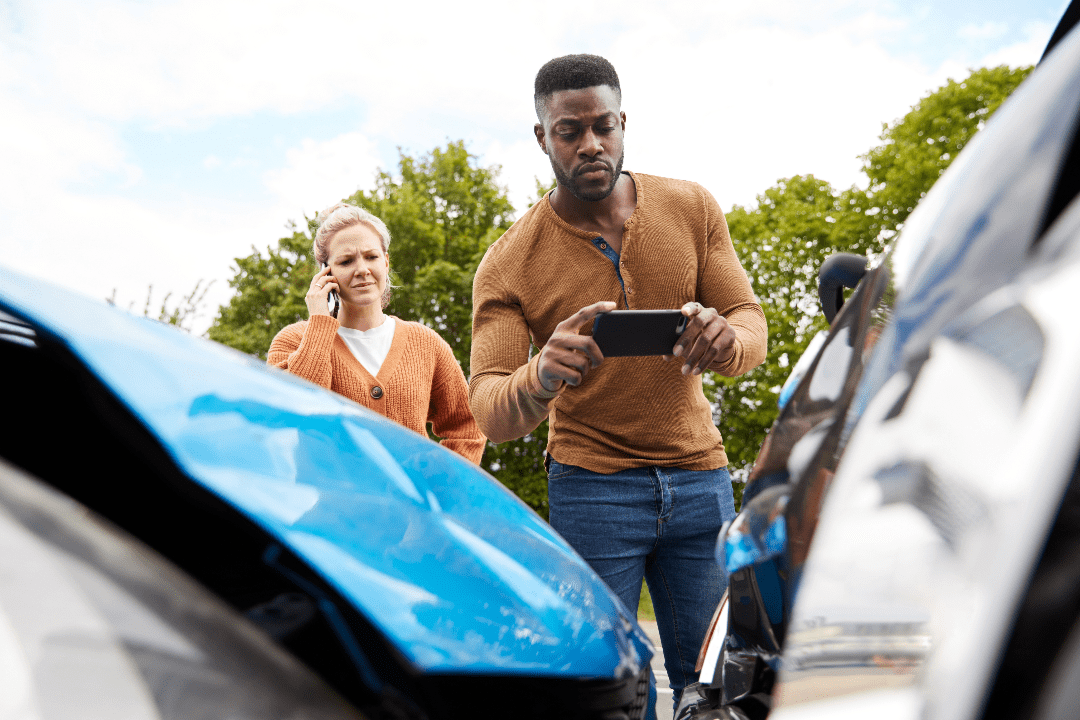
You can collect the evidence with your smartphones, and here is what you need to collect before the vehicle moves:
- Capture the close-ups of the impact
- The context of the accident, like wide shots of the road layout, road markings and car positions.
- Photos of skid marks, broken glass, or weather conditions (e.g., sun glare, wet road)
- Save dashcam footage immediately so it doesn’t get overwritten
Phase 3: The Medical Check (Crucial for “Hidden” Injuries)
At the moment, you might feel alright, but don’t be too quick to dismiss your health. The reason is that your body at the moment is under an ‘adrenaline mask’. It is a powerful natural painkiller, and it does a fantastic job of masking pain.
It is very common for car accident victims to feel fine immediately after a crash but wake up the next morning in severe pain. And the common delay injuries could be whiplash, soft tissue damage and concussion.
However, it is important to see a doctor because the insurance company will look for medical evidence. If you don’t visit a GP, Walk-in Centre, or A&E, there is no official record of your injury. The other driver’s insurer could argue that because you didn’t seek help, you weren’t really hurt.
Phase 4: Reporting About a Car Accident (Insurance vs. Police)
Once you are safe and immediate actions are taken carefully, then you need to make two major phone calls.
1. Reporting to the Police (The 24-Hour Rule)
You do not need to call the police for every scratched bumper. However, legally, you must report the accident to the police within 24 hours if:
- You were unable to exchange details with the other driver at the scene.
- The other driver left the scene (Hit and Run).
- You suspect the accident was caused by a criminal act (like drink driving).
If you fail to report it within this window, the police can refuse to investigate, and your insurer might refuse to pay out.
2. Contacting Your Insurer (The “Notification Only” Call)
This is an important step, and you must inform the insurer. There is a common myth that if I don’t want to claim, I shouldn’t tell my insurer.” This is dangerous advice.
Almost every UK car insurance policy has a clause stating you must report any incident, regardless of fault. If you don’t, they can cancel your policy for “non-disclosure”.
When you call the insurer, be clear on your intentions that I am reporting for information only, and I was not involved in a non-fault accident.
Phase 5: Your Rights as a “Victim” (Compensation & Claims)
Because the accident wasn’t your fault, you have legal rights that go beyond standard car insurance. The law aims to put you back in the position you were in before the crash, financially and physically.
1. Who Pays for What?
In a non-fault accident, the other driver’s insurance company is legally responsible for your losses. This means you should not be left out of pocket.
- Your Excess: You may have to pay this upfront to your own insurer to get repairs started, but you can claim it back from the other side later.
- Your No Claims Discount (NCD): Most insurers will step back your NCD initially. However, once the other insurer admits liability (admits it was their fault), your NCD should be reinstated.
2. Courtesy Car vs. Credit Hire (The “Like-for-Like” Rule)
This is the biggest secret insurers often don’t explain clearly.
- Standard Courtesy Car: If you claim through your own policy, you usually get a small “Class B” hatchback like a Ford Fiesta or Vauxhall Corsa, even if you drive a Range Rover. This is just to keep you mobile.
- Credit Hire (For Victims): As a non-fault victim, you are entitled to a “Like-for-Like” replacement vehicle.
How it works: A specialist “credit hire” company gives you a car that matches your own (e.g., an SUV for an SUV) while yours is off the road. They recover the cost directly from the at-fault driver’s insurer.
Phase 6: Understanding Injury Claims (The 2025 Rules)
If you have been injured, the rules for claiming compensation changed significantly in May 2025. Here is what you need to know without the legal jargon.
1. The “Whiplash Portal” (Official Injury Claim)
For most minor road accident injuries, you can no longer just hire a high-street solicitor for free.
- The £5,000 Limit: If your whiplash injury is valued at less than £5,000, you must process it through the government’s Official Injury Claim (OIC) portal.
- Do It Yourself: The portal is designed for you to use directly, without a lawyer. However, many people still choose to use a legal representative to ensure they don’t undervalue their claim.
2. UPDATE: The May 2025 Tariff Change
This is vital new information. If your accident happened on or after 31 May 2025, the compensation payouts for whiplash have increased.
- What Changed: The government introduced a ~15% increase to the fixed compensation tariffs to account for inflation.
- What This Means: If you suffer a 6-month whiplash injury, the fixed payout is now higher than it was for accidents in 2023 or 2024.
- The Exception: This “fixed tariff” only applies to whiplash. If you have “non-tariff” injuries, like a broken finger, severe anxiety, or tinnitus. These are valued separately and are often worth much more.
3. Who is Exempt from the Portal?
The “vulnerable road users” are exempt from the portal, like pedestrians, cyclists, motorcyclists, horse riders and passengers under 18. If you fall into these categories, the fixed tariff rules do not apply to you. Your compensation is likely calculated based on the severity of your pain, not a fixed government list.
Frequently Asked Questions
What to do after a minor car accident UK
Even for a tiny bump, the legal steps are the same as a major crash.
- Stop immediately: It is illegal to drive off, even if there is no damage.
- Exchange details: Swap names, addresses, and registration numbers with the other driver.
- Take photos: Snap the damages of the car and the road position before moving the cars.
- Don’t say sorry: Admitting fault now can hurt your insurance position later.
- Report it: Tell your insurer within 24 hours (even if you don’t want to claim).
Is there a time limit to report a car accident to insurance UK?
Yes, usually 24 hours. Check your policy wording, but most UK insurers require you to tell them about any accident within 24 to 48 hours. This is called a “Notification Only” report. If you tell them after a week or don’t tell them at all, they can refuse and even cancel your policy for non-disclosure.
Do you have to report a minor car accident to police UK online?
Only in specific cases. You do not need to report a minor accident to the police (online or via 101) if you exchanged details with the other driver and no one was injured.
How does car insurance work if it’s not your fault?
If the accident was 100% the other driver’s fault, their insurance company pays for everything.
- Your Repairs: Paid for by the other side.
- Your Excess: You might have to pay it initially, but you claim it back from the other insurer.
- Your No Claims Discount: Once the other insurer admits liability (agrees it was their fault), your No Claims Discount is usually reinstated as if the accident never happened.
What if I don’t stop the car after an accident?
Never do this. Failing to stop is a serious criminal offence under the Road Traffic Act 1988. Even for a minor scratch, driving away can result in 5 to 10 penalty points on your licence, a fine of up to £5,000, and up to 6 months in prison for serious cases.
Wrapping Up: What to Do If You are the Victim of a Car Accident
Being the victim of a car accident is stressful enough without having to fight for what you are owed. By following the steps above, you have done the hard part: you stayed safe, you gathered the evidence, and you protected your legal position.
Remember the golden rule, never face the insurer alone. They often try to settle non-fault claims quickly and cheaply. But you are entitled to proper repairs, a like-for-like replacement vehicle.